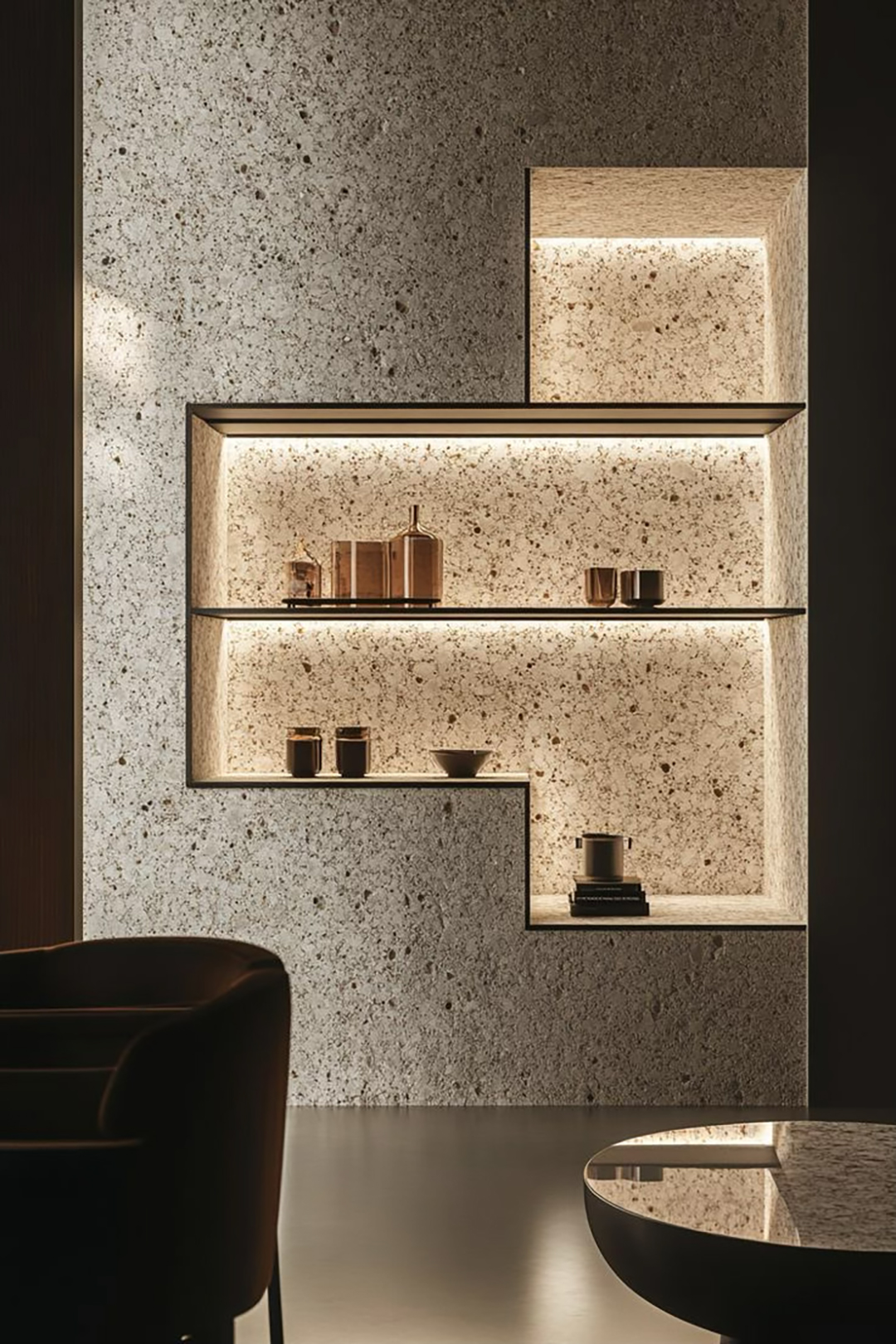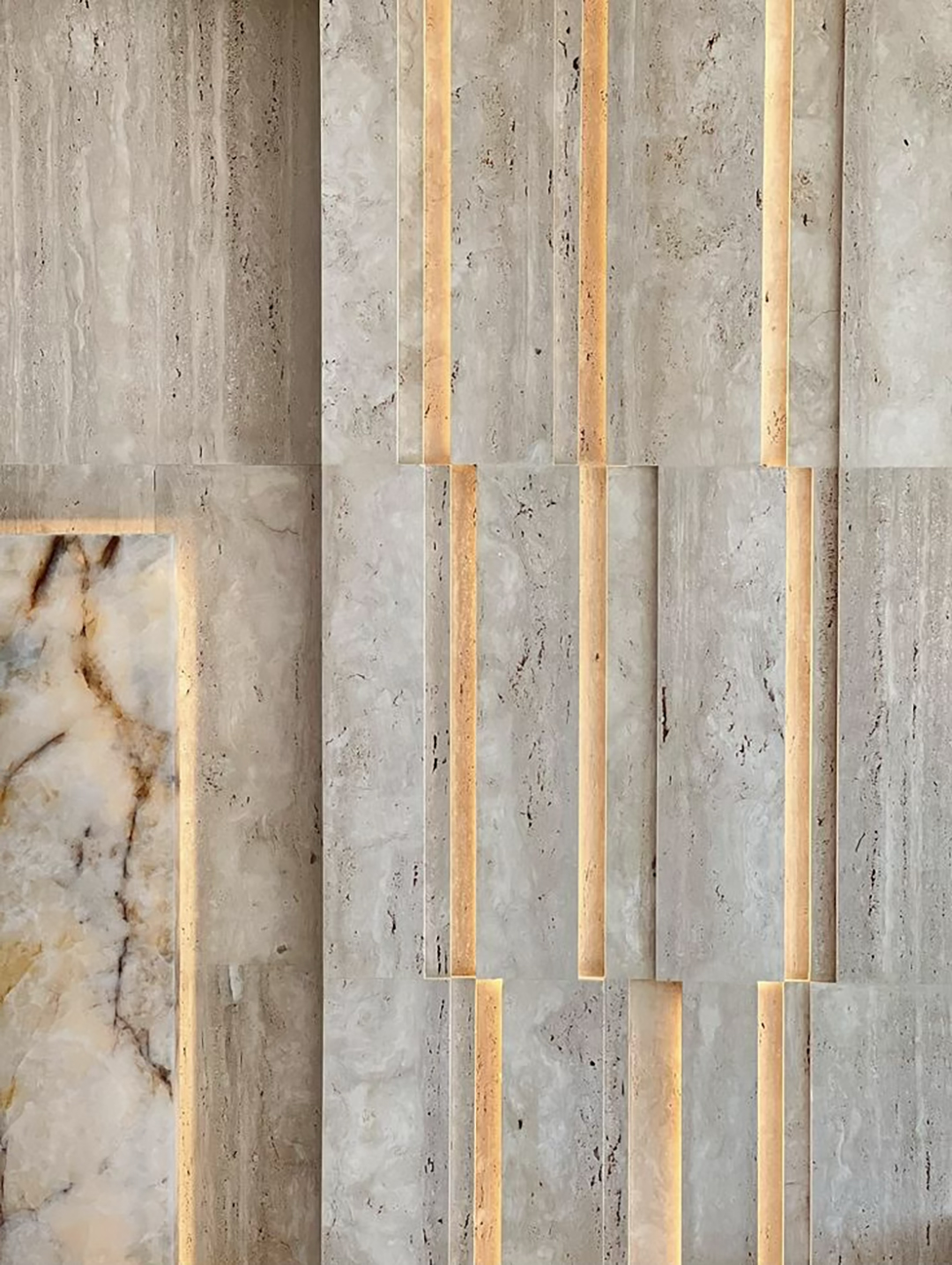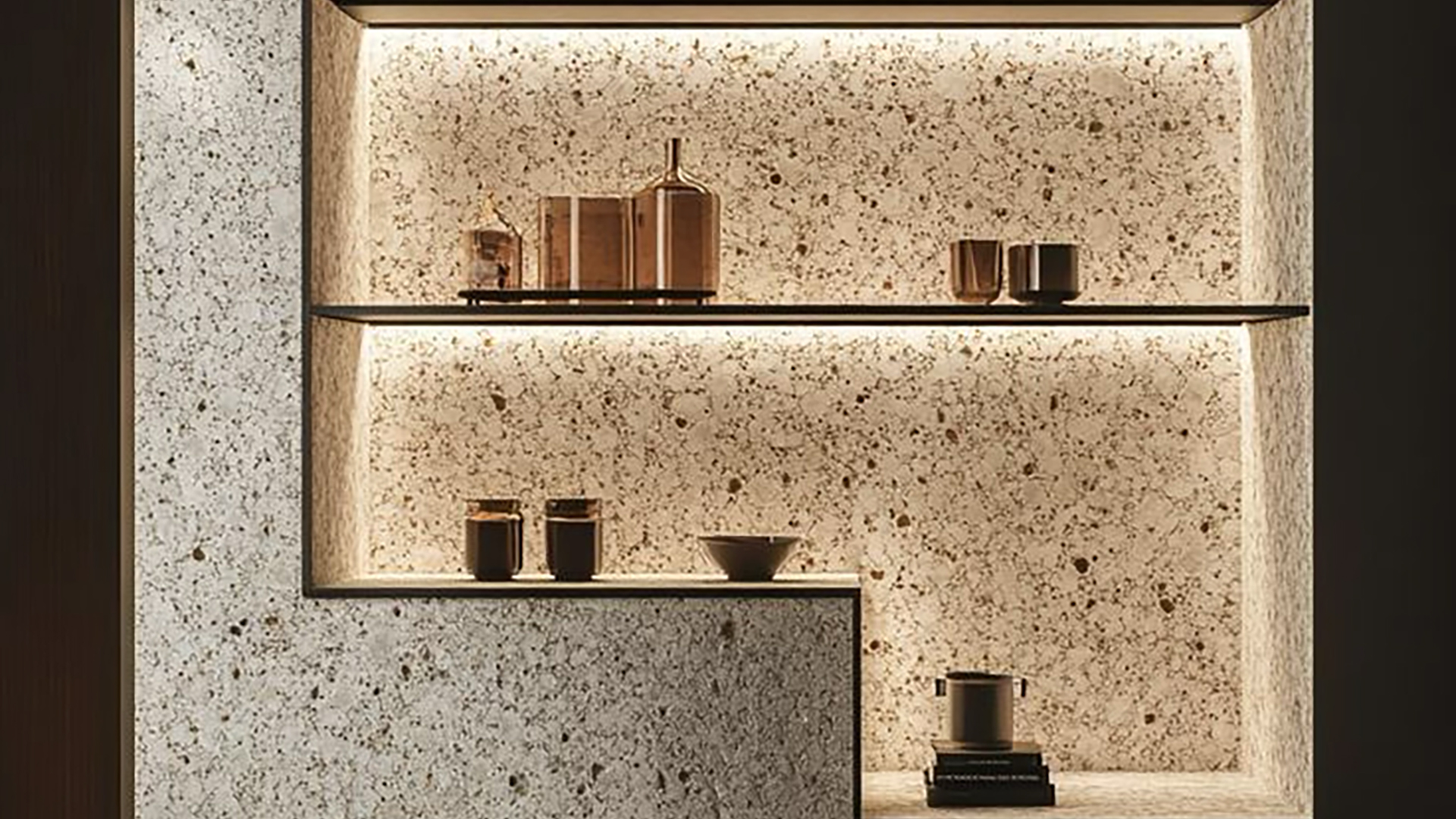
In minimalist spaces, the impact of light lies not in its visibility, but in the way it shapes the space.
When its source recedes into ceilings, walls or furniture, architecture and materials come forward, preserving the visual integrity of the whole.
Concealed light sources, linear lighting and recessed fixtures allow the source to fade into the background while its effect comes forward. A fine line of light emerging from the ceiling, a soft glow extending across a wall or light spilling from beneath a piece of furniture feels less like an addition and more like a natural part of the design.
This approach creates visual continuity and a sense of calm. Rather than drawing attention to the fixture itself, it allows architectural forms, materials and the atmosphere shaped by light to be experienced.
Light does not need to reveal its source to make its presence felt. Sometimes, its greatest impact lies in remaining unseen.