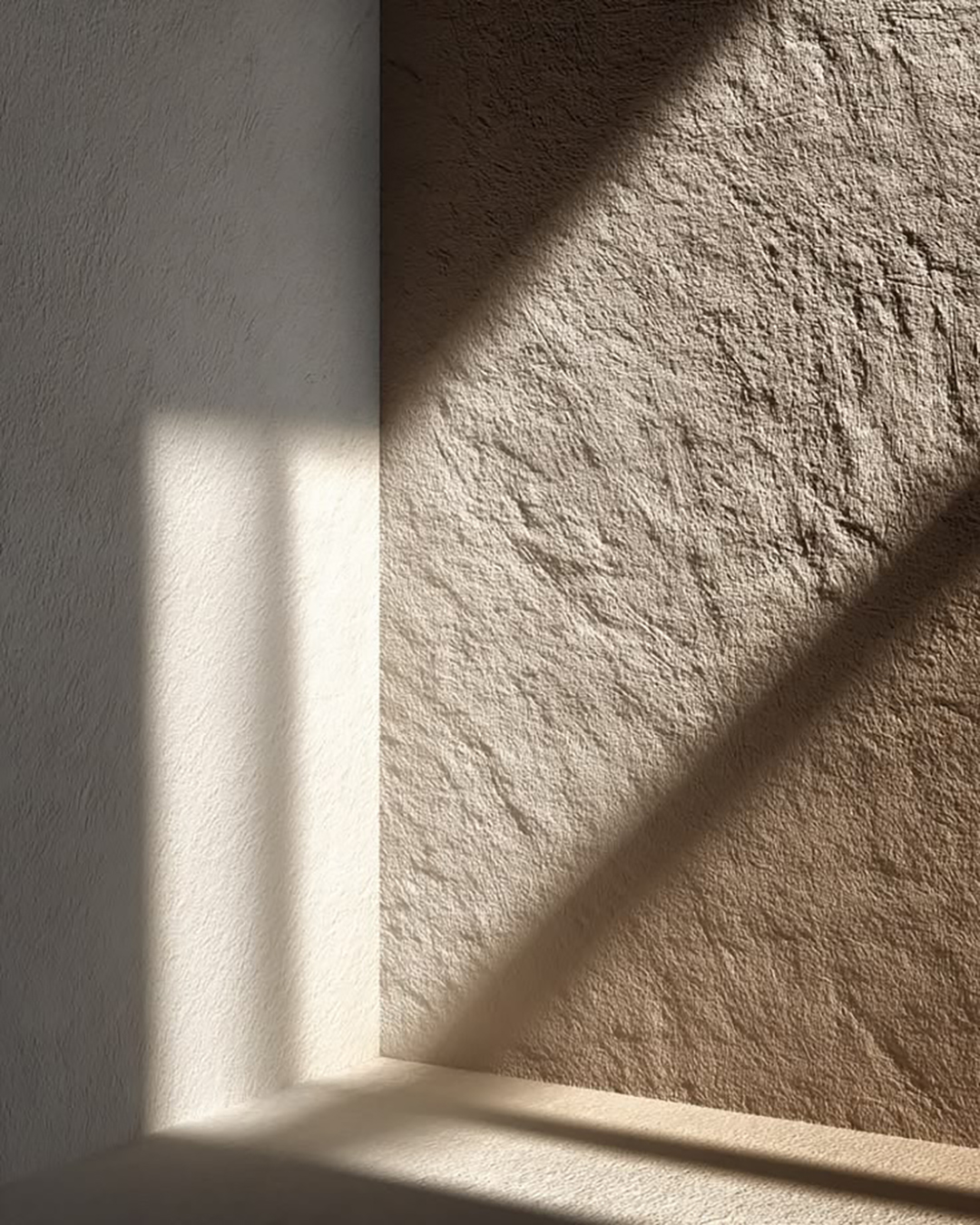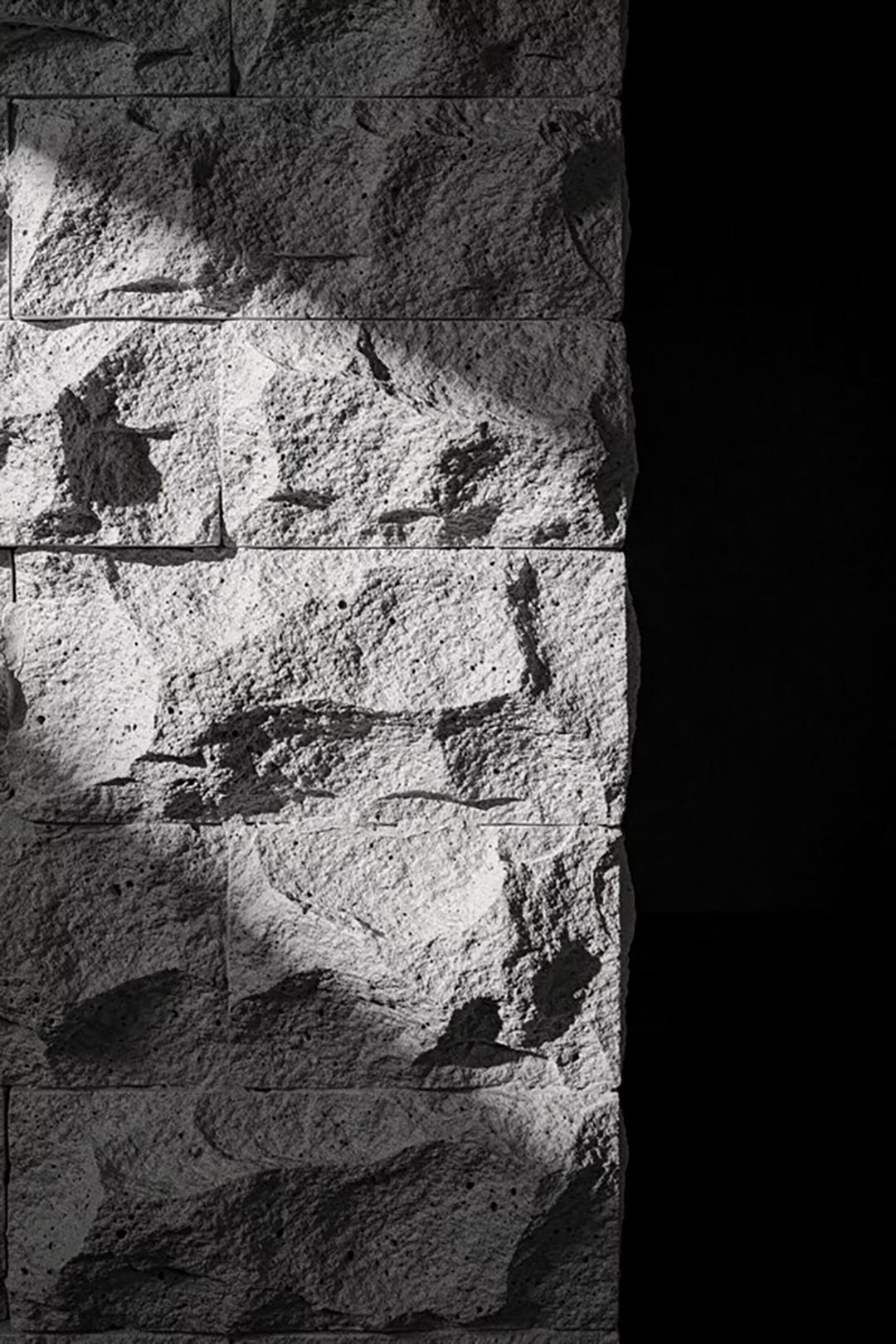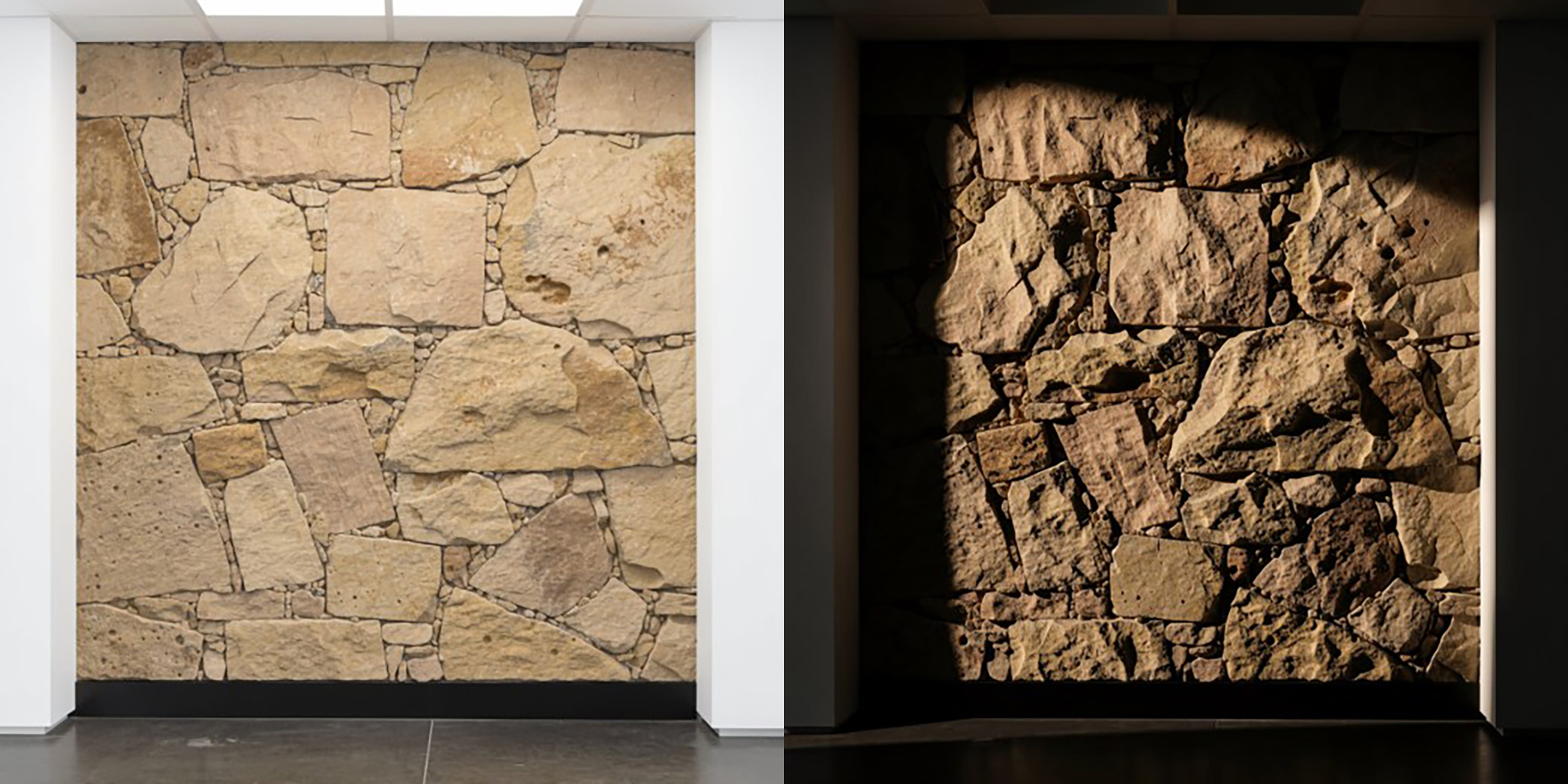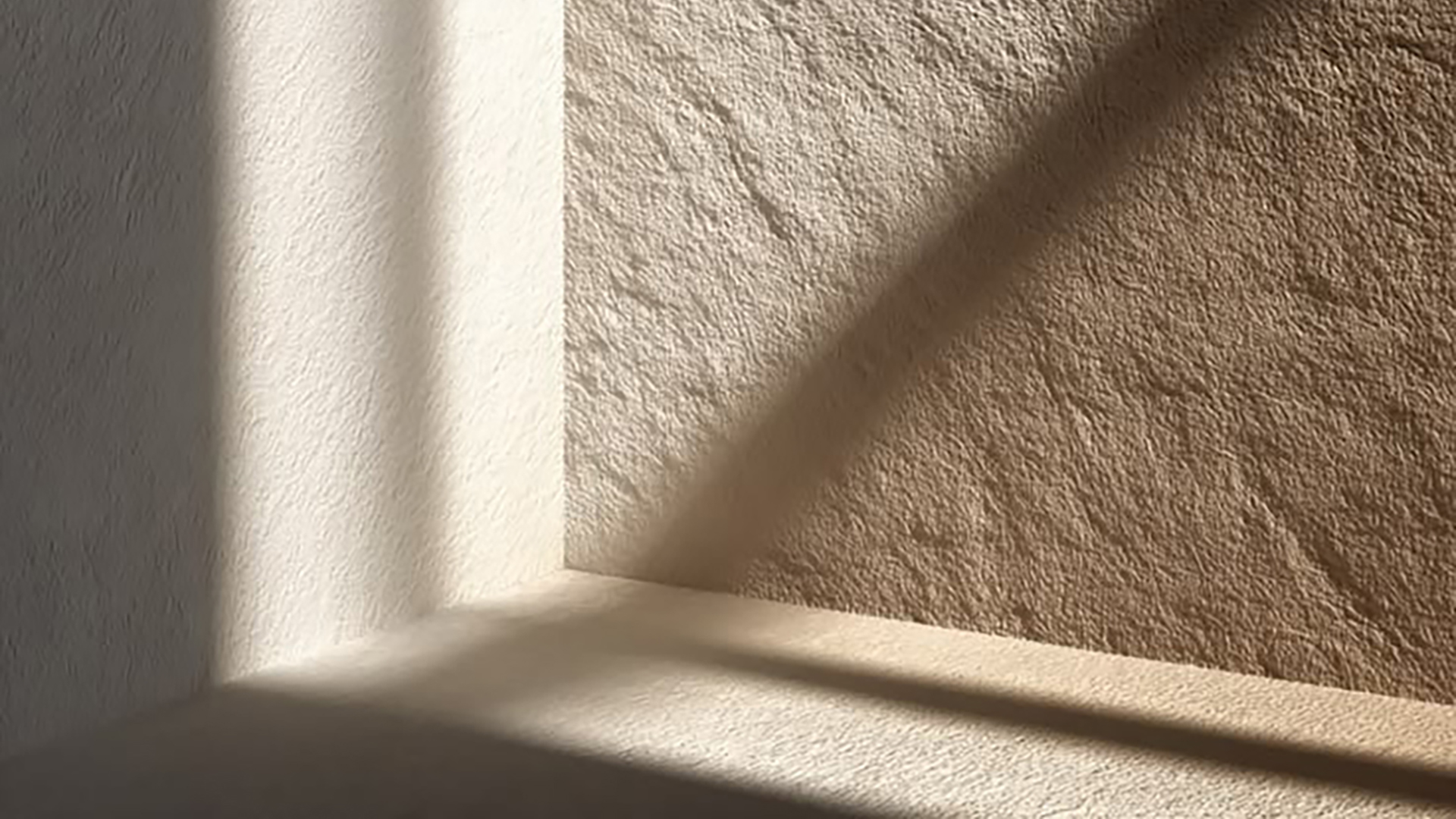
A surface becomes visible not only through its material qualities, but also through its relationship with light.
As the direction, intensity and colour of light change, the same texture can take on a different character—at times gaining depth, at times appearing softer and, at times, disappearing altogether.
Shadows emphasise recesses and projections, while reflections alter the character of a surface. Angled light reveals the rhythm of a relief, whereas softer light creates calmer transitions across the surface. Whether glossy, matte, porous or translucent, every material interacts with light differently.
For this reason, light does more than illuminate texture; it defines it, gives it depth and makes it visible anew. Darkness forms the other half of this relationship, because the perception of a space is shaped not only by how much of a surface we see, but also by how much remains in shadow. The colour of light also affects how a surface is perceived. Warm light enhances natural tones and subtle transitions, while cool light can make details appear sharper.
The relationship between light and texture is therefore not a lighting decision added at a later stage; it is an integral part of the design, conceived together with the material, surface and space.