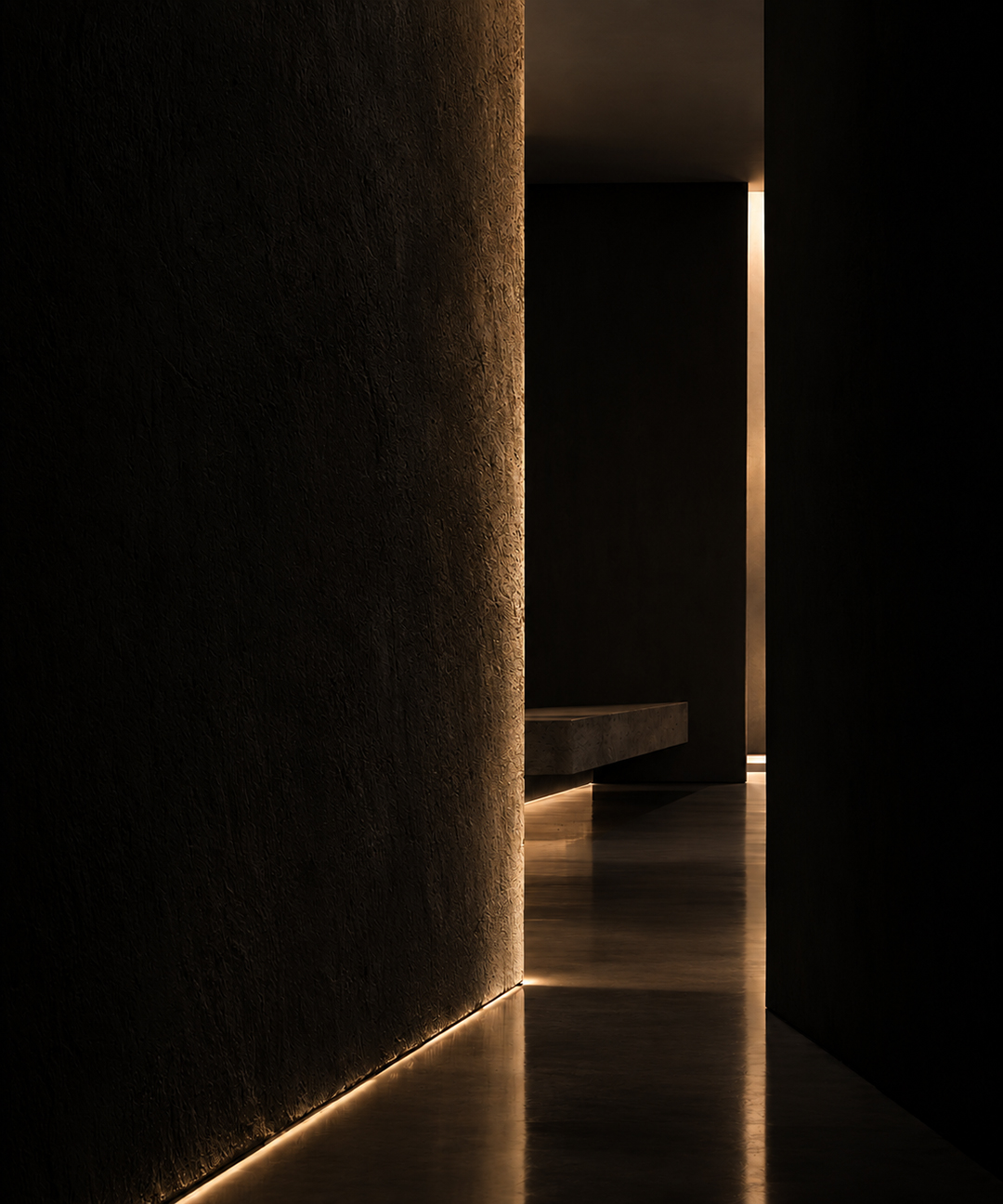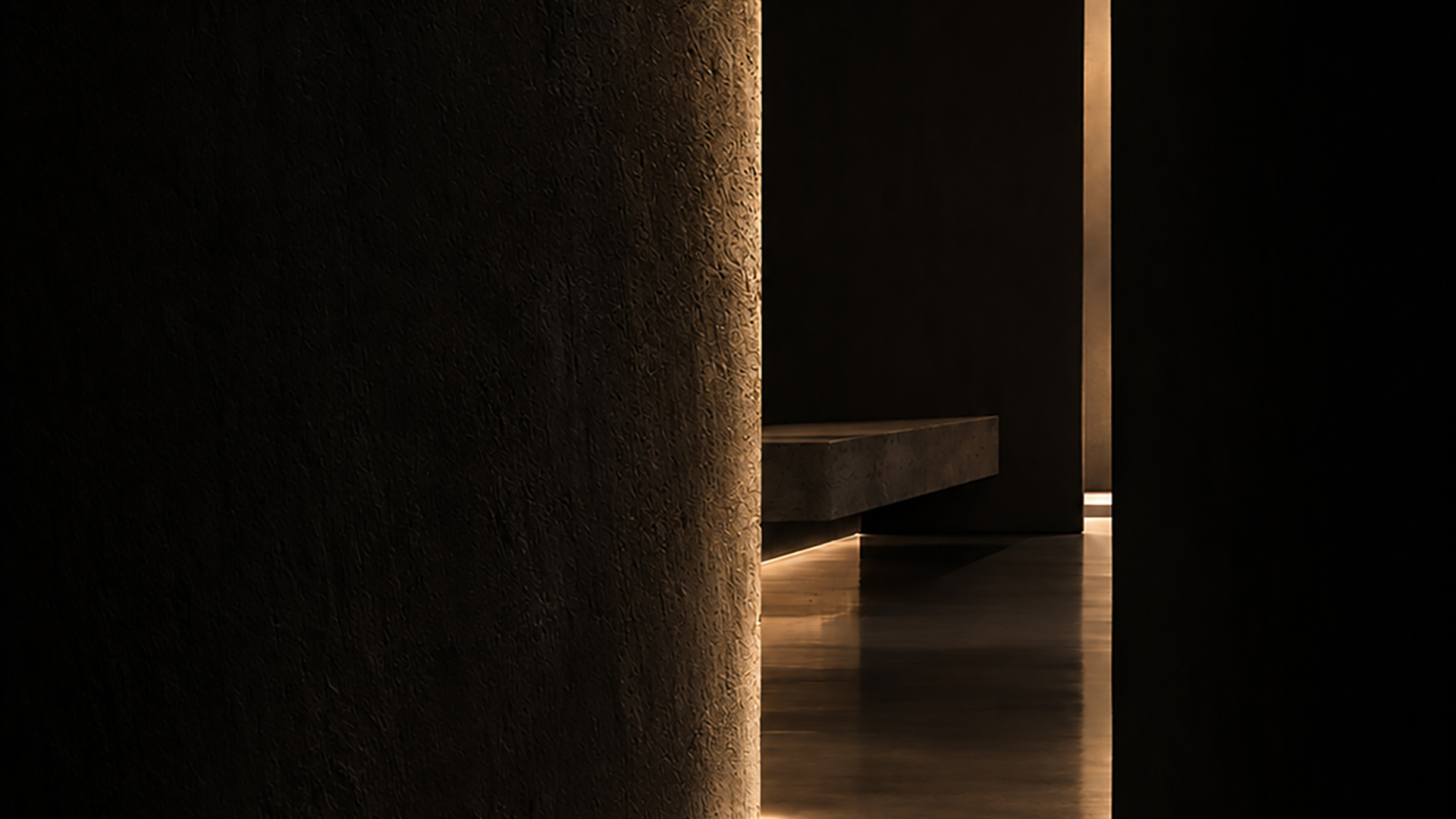
I have always believed that light is best understood in the presence of darkness.
When designing a space, we often begin by considering form, material, proportion, and function. Then light comes in; it makes the space visible, highlights it, and completes it. I believe, however, that light is there much earlier — from the very moment the design begins.
A space is shaped by far more than what we see. Light, shadow, material, proportion, and time come together to define its character.For this reason, we do not see architecture and lighting as two separate disciplines.
They are not two different languages describing the same space, but two parts of the same thought.
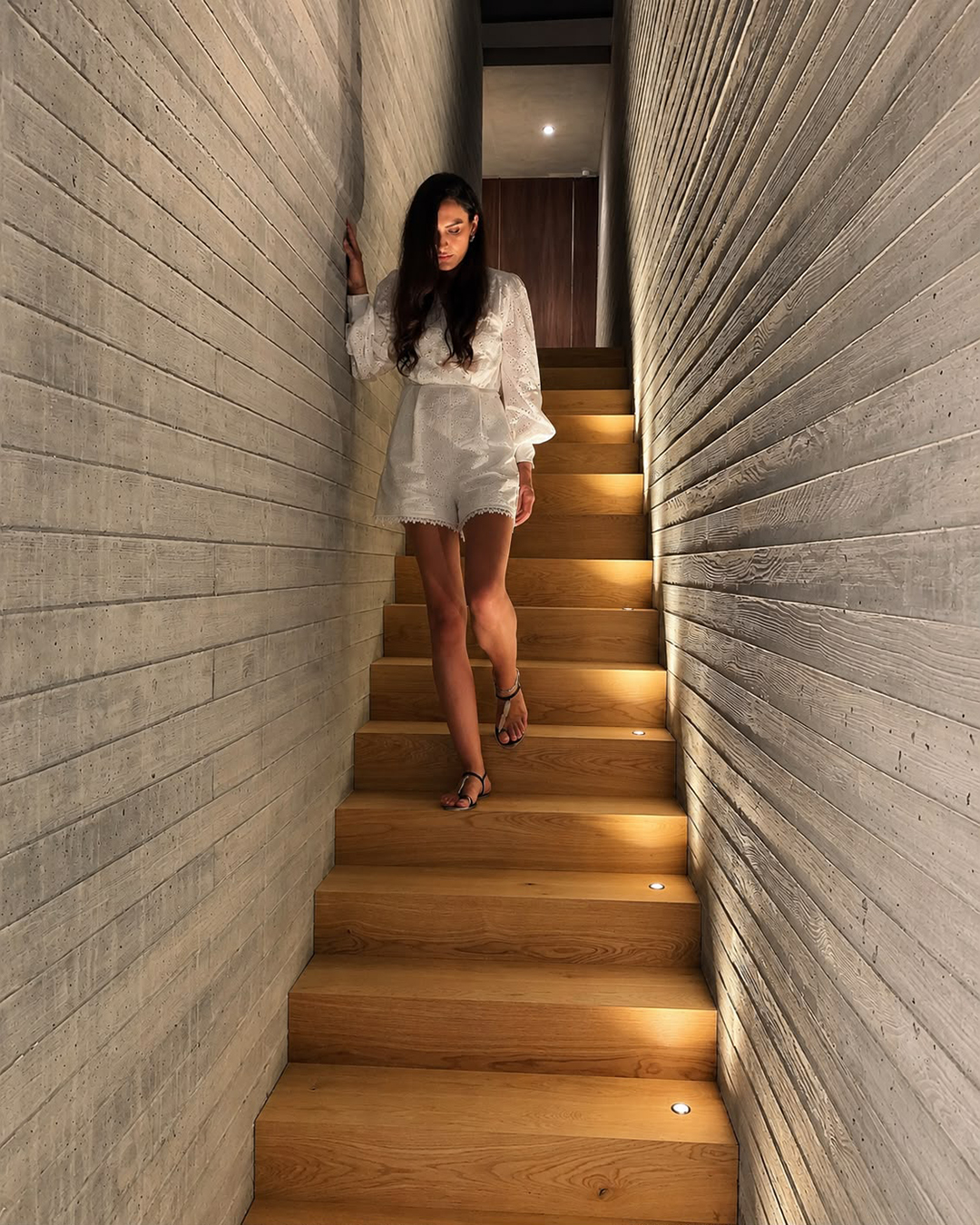
The way a wall is positioned, the material it is made of, and the way it receives light are not independent decisions. The texture of a surface changes with the direction of light falling upon it. The perception of a void is shaped not only by its geometry, but also by the relationship between light and shadow.
We begin by looking beyond what a space reveals, asking instead what it makes us feel.
Sometimes, the answer is not more light.
It may be leaving a surface in darkness. It may be revealing the texture of a material only from a particular angle. It may be defining a corridor not through light, but through its absence. It may be strengthening a building’s relationship with its surroundings not by illuminating it more, but by allowing less of it to be seen.
Darkness is not emptiness to us.
Darkness is the space in which light reveals itself.
And light is not simply a tool for illumination.
It can behave like a material. It can create a boundary. It can guide. It can create depth. It can transform the character of a surface. It can define the rhythm of a space.
This is precisely why we think of architecture and light as inseparable.
Architecture carries light; light reinterprets architecture.
Together, they shape not only how a space looks, but how it is experienced.
This has been at the heart of our approach to design from the very beginning:To think of architecture not simply as a structure, but as a whole of relationships between light and darkness, material and space, what is revealed and what remains unseen.
A well-designed space should reveal more than its beauty in daylight. It should take on another character when night falls.
It should change with time.
It should reveal something different as you move closer.
And sometimes, it should leave a feeling behind without saying anything at all.
For us, design begins precisely here:
Where architecture begins to be considered through light, and light through architecture.